What Size Generator Do I Need for My House in Arizona?
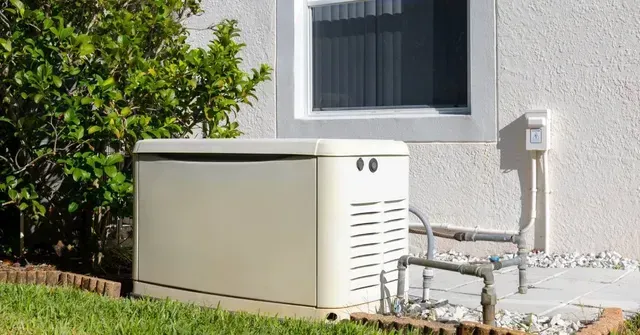
If you are wondering what size generator you need for your house in Arizona, most Valley homes with one air conditioner land on a 14kW to 18kW standby unit, and larger homes or homes with two AC units usually need 22kW to 26kW. A portable in the 7kW to 12kW range covers essentials only, like the fridge, some lights, and fans. What drives the number is your air conditioning tonnage, whether your big appliances are gas or electric, and the size of your electrical panel.
I am Johnny Oliver. My sons Justin and John work with me, and we have been wiring homes out here since 2006 under ROC #229347. Here is how I would explain it standing in your driveway.
What Size Generator You Need in Arizona Starts With Your AC
In most of the country, a generator keeps the food cold and the furnace running. Here it keeps you from cooking inside your own house. When a monsoon storm drops the power at four in the afternoon in July, a Buckeye home climbs past 90 degrees in a couple of hours. With small kids or an elderly parent inside, that is a safety problem, not an inconvenience.
Air conditioning changes the math. A 4-ton condenser pulls a huge slug of power the second the compressor kicks on, often two or three times what it draws while running. The generator has to swallow that surge without stalling. A unit that would be plenty in Ohio comes up short here.
• Under 1,800 square feet, one 3-ton AC: 14kW is often enough
• 1,800 to 3,000 square feet, one 4- or 5-ton AC: 18kW is the common answer
• Over 3,000 square feet, or two AC units: 22kW to 26kW
• Essentials only, no central air: a 7kW to 12kW portable with an interlock
The same load calculation that sizes a generator tells you whether your service can carry a new garage circuit or two. If you are planning a shop, a charger, or a mini split out there, start with can I add a subpanel to my garage.
A Load Calculation Beats a Guess
Those numbers start a conversation. They are not an answer. A real load calculation takes about half an hour. I read the nameplate on your condenser, check whether the water heater, range, and dryer are gas or electric, and look for a pool pump, well pump, or EV charger. Then I add up what has to run at the same time.
Guessing hurts both ways. Undersize it and the generator trips on the hottest night of the year, the night you bought it for. Oversize it and you spent thousands extra running a big engine at low load. We lay out the choices on our backup generator and surge protection page, but nothing beats eyes on your equipment.
Load Shedding, Transfer Switches, and Your Panel
Here is the trick most homeowners never hear. You do not have to size for everything running at once. A load-shedding module watches the generator and drops a big load for a minute when things get tight. Your dryer waits sixty seconds while the AC starts. You never notice. Smart AC modules let two condensers share one generator by taking turns. That often takes a 24kW job down to 18kW.
The generator is only half the install. An automatic transfer switch senses the outage, starts the unit, and swaps the house over in about 30 seconds. It also keeps generator power off the utility line, which is how linemen get hurt. That part is not optional. A whole-house switch carries the whole panel and leans on load shedding. An essential-circuits switch feeds a small subpanel with the AC, fridge, and a few outlets for less. Both are legitimate.
Then there is the panel itself. Plenty of West Valley homes from the late 90s have panels that are full, or a brand nobody makes breakers for. I would rather tell you that on day one than after the pad is poured, and our electrical panel and circuit services page explains what that work involves.
A Buckeye Family Who Sized It Right
Last August a family off Verrado Way called us. They had lost power twice in three weeks, once for nine hours, and grandma lives with them. They already had a quote for a 26kW unit that made their eyes water.
I ran the load calc. Two AC units, but a gas range, gas water heater, and gas dryer. That is a big deal. We installed an 18kW standby with a smart AC module so the condensers take turns, plus load shedding on the pool pump. Whole house covered, thousands under the other bid. Two weeks later they rode out a five-hour outage and nobody inside noticed until they saw the neighbors' porch lights were dark.
When a Big Standby Generator Is Overkill
I talk people out of these most weeks. If you lose power once a year for 40 minutes, a $12,000 standby unit is hard to justify. Same if you are in a newer neighborhood with underground lines, or you are selling in two years.
For those folks I recommend a 7kW to 9kW portable with an interlock kit and an inlet box. Roll it out, plug it in, flip two breakers, and you have the fridge, lights, fans, and internet. It will not run central air, and I say so straight. A battery backup is worth a look too, especially with solar, though batteries alone rarely carry a Valley AC unit for long in July. Either way, we handle the safe installation of the inlet, interlock, and wiring. Never run cords through a window or backfeed a dryer outlet. That is how houses burn.
Let's Figure Out Your Number
You should not have to guess at what size generator you need for your house in Arizona. Call me at 623-387-9171 and we will come out, run a real load calculation, and give you honest options. No pressure and no upsell. We serve Buckeye, Goodyear, Litchfield Park, Avondale, Surprise, and the Phoenix metro, and we keep 24/7 emergency electricians on call. You can meet the whole family on our home page.
Frequently Asked Questions
Will a 22kW generator run my whole house in Phoenix?
For most homes up to about 3,500 square feet with one air conditioner, yes, usually with room to spare. Add a second AC unit, an electric range, and an electric water heater and 22kW gets tight without load management.
Can a portable generator run my air conditioner?
A typical 7kW to 9kW portable will not start a 4-ton central AC. The surge is too much. Some 11kW to 12kW portables can do it with a soft-start device on the condenser, but little is left for the rest of the house. If cooling in July is your reason for buying, plan on a standby unit.
What does a standby generator installation cost here?
It depends on unit size, the gas line run, the pad, the transfer switch, and any panel work. A straightforward 18kW install runs well under a 26kW job with a long gas line and a panel upgrade. We give a written quote with each piece broken out, the same way we handle a standard electrical service call.