How Many Amps Does My House Need in Arizona?
For most Arizona homes today, the answer to how many amps you need is 200. A smaller, older home with gas appliances can get by on 100 or 125 amps, while a large home with an EV charger, a pool and two AC units may need 320 or even 400-amp service. The only way to know for sure is a load calculation.
Why Arizona Homes Need More Amps Than Most
Our air conditioners are the reason. A 4- or 5-ton AC unit pulls more power than anything else in your house, and out here it runs for hours a day from May through October. Add a pool pump, an electric range, an electric dryer and maybe a second AC for an upstairs zone or a casita, and you can see how a 100-amp panel gets stretched thin.
My dad started Oliver Electric in 2006, and a lot of the homes we worked in around Buckeye and the West Valley back then had 100 or 125-amp service. That was fine for the way people lived when those houses were built. It's not fine when you plug in an electric car every night.
How an Electrician Figures Out How Many Amps You Need
We don't guess. We do a load calculation using the method the National Electrical Code lays out. It adds up what your home actually uses:
• Square footage for general lighting and outlets
• Kitchen and laundry circuits
• Fixed appliances like the range, dryer, water heater and dishwasher
• Heating or cooling, whichever is bigger, and in Arizona that's almost always the AC
• Pool and spa equipment
• EV chargers and anything you're planning to add
Then we compare that number to what your service can safely carry. If your panel is rated for 125 amps and your calculated load is sitting right at the edge, that's a problem waiting for a hot August afternoon.
Signs Your Current Service Is Too Small
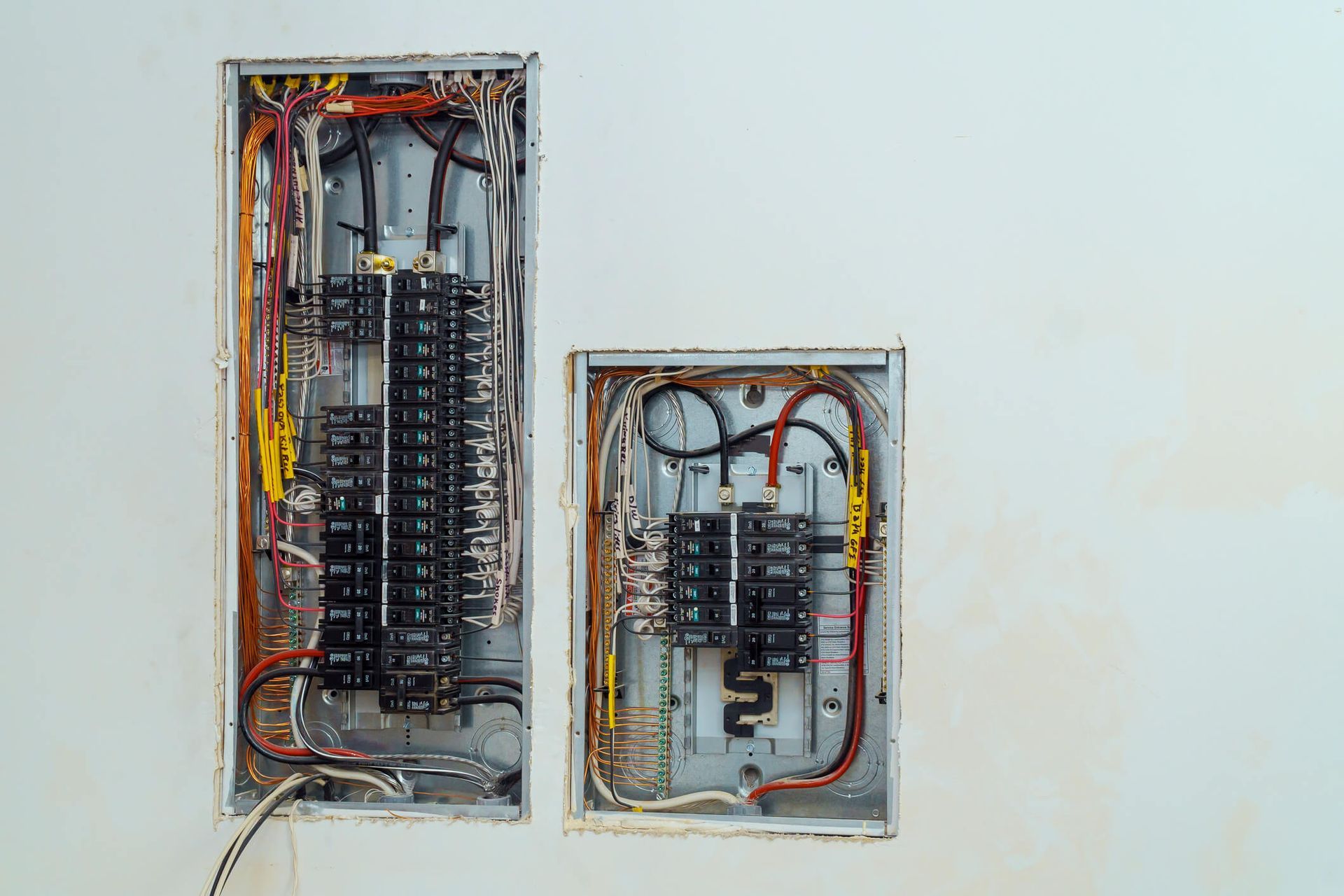
The panel label tells you the rating, but your house will tell you if it's struggling. Lights that dim when the AC kicks on, breakers that trip when the dryer and oven run together, and a panel that feels warm are all clues. We covered those warning signs in 5 signs your home needs a panel upgrade, so I won't repeat all of it here. The short version: if you're adding a big load and you already see those signs, get it checked first.
A Job That Shows Why Planning Matters
A few months ago my brother John and I met a homeowner in Buckeye who had just bought an electric truck. He'd ordered a Level 2 charger online and wanted us to "just hook it up." The house had 125-amp service, a 5-ton AC, an electric range and a pool. After the load calculation, there wasn't room for a 48-amp charger without overloading the service on a summer evening.
We gave him two honest options. One was a full service upgrade to 200 amps. The other was a load-management device that pauses the charger whenever the AC and range are pulling hard. He picked the upgrade because he was also planning a casita, but for plenty of people the load-management route is the smarter, simpler path. We'll always tell you both.
When You Don't Need an Upgrade
Not every house needs more amps. If your home is mostly gas, meaning the range, dryer, water heater and furnace, your AC is a reasonable size, and you're not adding an EV charger or a pool, 100 or 125 amps may be plenty. We've talked people out of upgrades they didn't need. Our job is a long-term fix, not an upsell.
More amps also won't fix bad wiring or a worn-out panel. If your panel is a brand with a history of problems or has corroded bus bars, the conversation is about replacement, not just size.
What the Upgrade Process Looks Like
Going from 100 or 125 amps to 200 usually means a new panel, a new meter base, and sometimes new service conductors. We pull the permit, coordinate the shutoff and meter set with your utility, and schedule the inspection. Most residential upgrades are finished in a day once the utility is lined up. Our electrical panel and circuit services page has the details, and if a charger is in your plans, see our EV charger installation page too.
Find Out How Many Amps Your House Needs
If you're adding an EV charger, a pool, a casita or a bigger AC, call us before you buy the equipment. We'll run the load calculation and tell you straight how many amps your house needs and what your options are. Oliver Electric is family-owned, licensed under ROC #229347, and available 24/7. Call 623-387-9171, visit our homepage, or learn more about your local electrician in Buckeye.
Frequently Asked Questions
Is 100-amp service enough for a house in Arizona?
It can be for a smaller home with gas appliances and no EV charger. Most all-electric homes with central AC need 200 amps.
Do I need 200 amps for an EV charger?
Not always. A load calculation decides it. Some homes can add a charger on their existing service, especially with a load-management device.
How do I find my home's amp rating?
Look at the main breaker at the top of your panel. The number stamped on it, like 100, 125 or 200, is usually your service size. The meter base and service wires have to match, so have an electrician confirm it.
Contact Oliver Electric in Buckeye, AZ
Oliver Electric LLC
18927 W Latham St
Buckeye, AZ 85326
Phone: 623-387-9171
Stay connected with Oliver Electric for electrical tips, project updates, and helpful information for homeowners and businesses.
Follow Oliver Electric Online:
Facebook | X | Instagram | YouTube
Worked with Oliver Electric?
Leave us a review on Google Maps