Why Do My Lights Keep Flickering? | Buckeye Electrician
August 10, 2026

Lights keep flickering in one fixture? It is usually a cheap bulb, a loose bulb, or a dimmer that does not match your LEDs. But if lights flicker all over the house, or they dim every time the AC kicks on, that can point to a loose connection or a failing neutral, and those are problems that start fires. Here is how to tell the harmless from the dangerous.


Johnny Oliver founded Oliver Electric in Buckeye back in 2006, and with his sons Justin and John in the business, the family has looked at close to two decades worth of flickering light calls across the West Valley. The advice below is the same thing they tell friends at church: do not panic, but do not ignore it either.


One Flickering Light Is Usually a Cheap Fix

If the flicker lives in a single lamp or fixture, run through the easy stuff first. Tighten the bulb. Try the bulb in another fixture. If it is an LED on a dimmer, check that the dimmer is rated for LEDs, because an old dimmer chopping power to a modern LED is the single most common flicker we see, and the fix is a compatible dimmer or a better quality bulb. Bargain-bin LEDs flicker right out of the package. None of that is dangerous. It is just annoying.


When Flickering Lights Mean Trouble

Now the other side. Call an electrician promptly if you notice any of these:

      Lights flicker in several rooms at once, or the whole house blinks.

      Lights dim hard every time the AC, dryer, or another big appliance starts, and it is getting worse.

      Some outlets or lights get brighter while others get dimmer at the same time. That is a classic sign of a loose or failing neutral, and it can cook your electronics and start a fire.

      Flickering comes with buzzing, warm switch plates, or a smell like hot plastic.

Those symptoms are about loose connections, whether at a device, in the panel, or where the utility feed lands at your meter. Connections that arc build heat, and heat in a wall is how house fires start. Our electrical repair team treats whole-house flickering as a same-week call, not a someday call, and we run 24/7 emergency service for the scary versions.


A Real One From Buckeye

A family in a Buckeye subdivision called about lights that flickered when the microwave ran, and bedroom lights that had gotten strangely bright. The tech found a neutral lug at the panel that had worked itself loose over the years. The wire showed heat discoloration, which means it had been arcing inside that panel for a while. Tightening and repairing that connection took under two hours. Left alone, that is the kind of thing that ends with a fire truck in the driveway. The homeowner had lived with the flicker for almost a year because it seemed minor.


The Honest Part: Most Flickers Are Not Emergencies

I want to be fair here, because nobody needs an electrician selling fear. The majority of flickering light calls end up being bulbs, dimmers, or one loose connection at a single device, fixed quickly without drama. Some are not even on your side of the meter. If the whole neighborhood flickers during monsoon season, that is the utility, and APS or SRP need the call, not us. Our no-upsell rule is simple: we fix the actual problem, tell you what we found, and if the fix is a six dollar bulb, that is what we will tell you. What we do not recommend is guessing when the symptoms match the dangerous list above. A proper electrical inspection settles the question for good.


Flickering Lights? Get a Straight Answer - Call Oliver Electric

If your lights keep flickering and you are past the bulb-and-dimmer checks, let a licensed electrician put eyes on it. Oliver Electric is family-owned, ROC licensed (#229347), and has served Buckeye and the West Valley since 2006. We show up when we say we will, fix it for the long term, and never sell you work you do not need. Call 623-387-9171, day or night. And if your breakers are acting up along with the lights, read our post on why circuit breakers keep tripping.


FAQ: Flickering Lights

Are flickering lights dangerous?

One flickering fixture is almost always harmless. Flickering across multiple rooms, dimming when appliances start, or flickering with buzzing or hot smells points to loose connections that can cause fires, and that deserves a professional look.

Why do my lights dim when the AC kicks on?

A brief, slight dim is normal, because an AC compressor pulls a big gulp of power at startup. A hard dim that has gotten worse over time can mean a loose connection or an undersized or aging panel, especially in older West Valley homes.

Could the problem be the power company instead of my wiring?

Yes. If neighbors see the same flicker, or it only happens in storms, the issue may be the utility feed. An electrician can check where your service lands and tell you whether to call APS or SRP.
Outdoor beige generator beside a house wall with pipes and vents on a grassy lawn
August 21, 2026
Most Valley homes need 14-18kW standby, 22-26kW with two AC units. Honest generator sizing from Oliver Electric. Call 623-387-9171.
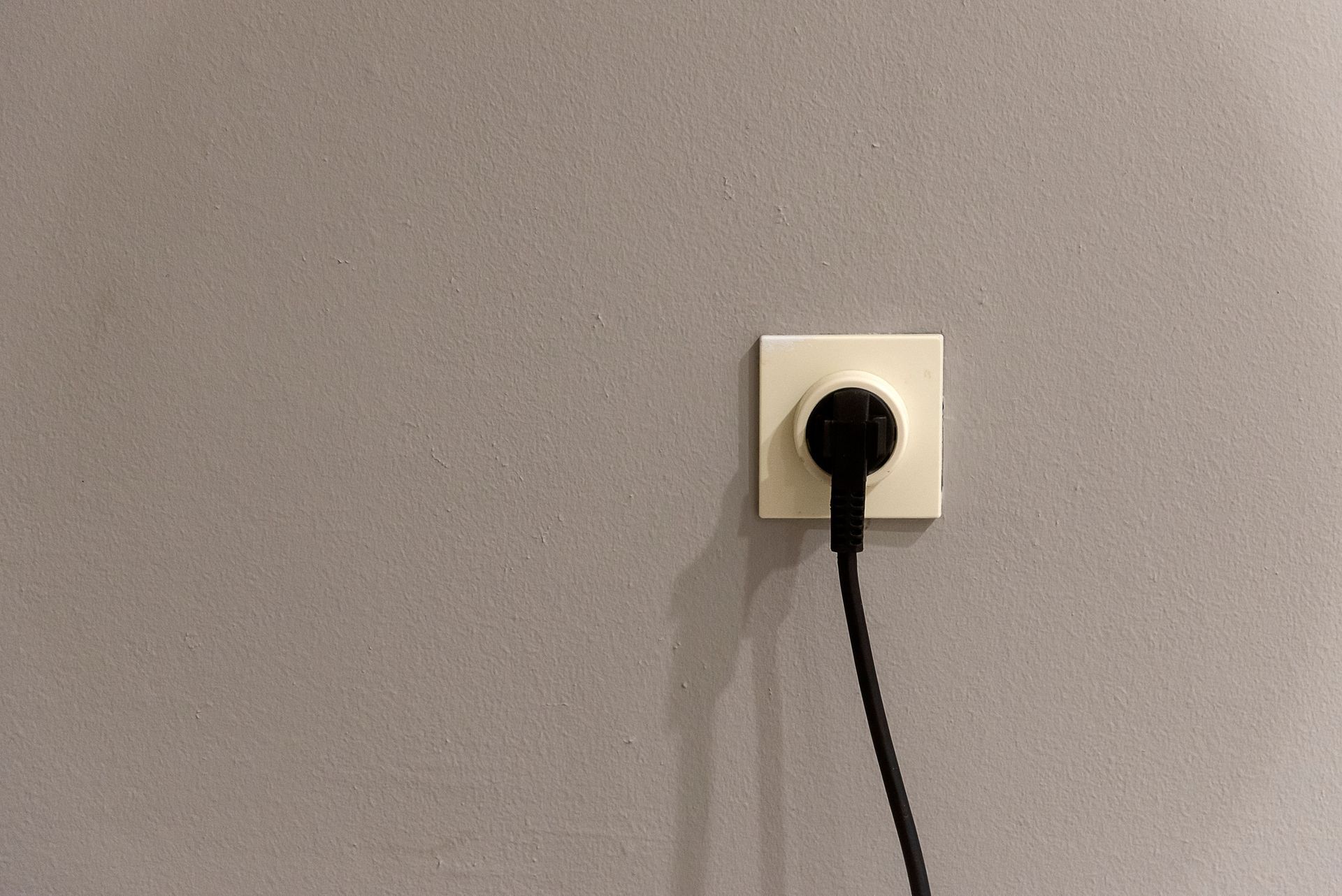
White wall outlet on a beige wall above gray wood flooring, near the baseboard
August 17, 2026
Outlets feel warm to the touch? It's usually an overloaded circuit or a loose wire heating up. A Buckeye electrician explains. Call 623-387-9171.
Two open electrical breaker panels with exposed wiring in a wall recess
August 1, 2026
Most Arizona electrical panel replacements run $1,800-$4,500. A Buckeye electrician explains what moves the price. Call Oliver Electric: 623-387-9171.
Aluminum wiring being replaced on a light switch
July 27, 2026
Is aluminum wiring dangerous? A Buckeye electrician explains the risks in 1960s-70s West Valley homes and the fixes that work. Call 623-387-9171.
July 24, 2026
Rewiring a house in Arizona usually runs $6,000 to $15,000. A Buckeye electrician explains what moves the price. Call Oliver Electric at 623-387-9171.
whole home surge protection in place with backup generator
July 17, 2026
Yes — Arizona monsoon lightning and grid surges fry electronics. A Buckeye electrician explains whole-house surge protection. Call 623-387-9171.
Commercial Breaker Panel
July 10, 2026
Circuit breakers keep tripping in your Buckeye or West Valley home? A local electrician explains the causes and fixes. Call Oliver Electric at 623-387-9171.
electrical plug logo
By Joe Merino June 25, 2026
One of the worst calls I've responded to was a panel hot to the touch and smelling like burning plastic — the homeowner had been resetting the tripping breaker for three days, thinking that was the fix. By the time I arrived, there was heat damage inside the panel. They were minutes away from a house fire. That single mistake — keep resetting instead of calling — is more common than most people realize, and it's exactly the kind of situation emergency electrical services exist to stop before it becomes a disaster. Warning Signs You Need Emergency Electrical Services Right Now Most homeowners miss the small signs because they seem normal — until they aren't. Here are nine warning signs that represent active danger inside your walls and panels: Lights flickering often Outlets or switches warm to the touch Buzzing, crackling, or sizzling sounds Brown or black marks around outlets An outlet that stops working and comes back on its own A small shock when touching a switch or appliance Breakers tripping more than once A burning plastic smell Power going in and out in one room Each of these signals something wrong you cannot see without proper testing. Heat, arcing, and failing connections happen inside walls and panels — and they don't announce themselves loudly until something goes seriously wrong. If you live in a hot climate, pay extra attention. Garages, attics, and outdoor electrical panels take a beating in summer heat, which accelerates wear on connections and makes weak spots fail faster. If something smells hot, sounds wrong, or keeps repeating, don't ignore it. The U.S. Fire Administration reports that electrical fires cause over 24,000 home fires annually — most of them preventable. Warm outlets deserve a closer look than most people give them, because not every warm plate is an emergency, and knowing the difference can save you a panicked midnight call, or push you to make one when it truly matters. A dimmer that runs a little warm is normal. An outlet that is hot, buzzing, or warm with nothing plugged in is not. I break down the causes, my warm-versus-hot rule of thumb, and typical repair costs in my guide on why your outlets feel warm to the touch Emergency or Can It Wait? How to Make the Right Call I look at risk first. Here is the decision framework I give every caller. Call immediately if you have any of these: Heat or smoke from an outlet, panel, or appliance Sparks or visible arcing A burning smell near any electrical component Buzzing coming from the panel Breakers that keep tripping Water near electrical components Loss of power to critical equipment It may be able to wait if: A single outlet stopped working with no heat, smell, or buzzing The issue is purely inconvenient and nothing feels or smells wrong The simple rule I tell people: if the issue can cause fire, shock, or equipment damage, call now. If it's just an inconvenience and everything is safe, schedule normal service. When in doubt, call and describe what's happening. A good electrician can help you decide whether it needs immediate attention — and that call costs you nothing. The Mistake That Turns a Small Problem Into a Dangerous One I had a call where a homeowner lost power to part of the house. Instead of calling, they bought a breaker at the hardware store and swapped it themselves. The problem wasn't the breaker. The real problem was a loose connection creating heat on that circuit. When they installed the new breaker, it kept feeding power straight to that bad connection. By the time I opened the panel and traced it, part of the wire insulation was damaged. What could have been a smaller repair turned into a much bigger job. DIY electrical work gets dangerous fast during emergencies because you can only see the symptom — not the cause. Fixing the wrong thing can keep power flowing to a failing connection, which is worse than the original problem. Tripping breakers, power loss, buzzing outlets, and burning smells are diagnostic signals that require someone trained to test the full system. The National Electrical Code exists specifically because electrical failures follow predictable patterns — patterns a licensed electrician is trained to read. Why Waiting Usually Costs More Than Calling Now The biggest misconception about emergency electrical services is that calling immediately is the most expensive option. Waiting is usually what drives the cost up. If I get there early, I can often catch a loose connection, overloaded circuit, or failing breaker before it damages more of the system. If you wait until there's smoke, melted wiring, or half the house has no power, the repair scope is significantly larger. I've seen neglected panels with loose breakers, corrosion, and heat damage — and the owner almost always says the same thing: "It had been acting up for a while." Flickering lights and tripping breakers were there weeks before the full failure. For commercial properties , the math is worse. A panel failure that shuts down a restaurant or warehouse means the repair bill is only part of the damage — lost business hours can hurt far more than the electrical invoice. How to Get a Faster Response When You Call Specific details are the single fastest way to get better service. Don't just say "my power is out." Instead, say: "My breaker keeps tripping." "I smell burning near the panel." "The outlet is hot." "Only half the house has power." "I saw a spark." "My business has no power to the front counter." Specific language helps me assess severity, prioritize your call correctly, and arrive with the right parts and tools the first time. If I ask for photos, send them. A picture of the panel, burned outlet, or damaged area can save significant diagnostic time on arrival and cut your wait in half. Emergency Electrical Services for Homes and Businesses Homeowners usually call when something feels dangerous — a burning smell, sparks, a breaker that won't stay on. Commercial clients typically call when the problem stops operations: lights out in a store, no power to equipment, a panel issue affecting the floor. For both, the best thing you can do right now is keep your panel area clear, label every breaker, and treat recurring warning signs as action items. Electrical problems don't fix themselves. Don't Wait Until It's a Bigger Problem If you recognized any warning signs here — flickering lights, warm outlets, burning smells, repeated breaker trips — that's your home or business telling you something is wrong. Call a licensed electrician now. Describe exactly what you're seeing. The call is free, the information helps, and getting ahead of an electrical problem is always cheaper than dealing with the aftermath. Emergency electrical services are available 24/7 for a reason — use them before a small issue becomes a dangerous one. Oliver Electric LLC https://www.oliverelectricaz.com/ 623-387-9171
Electrical Emergency Phoenix Safety Guide
May 18, 2026
Learn what to do if you smell burning, see sparks, lose power, or face an urgent electrical issue in your Phoenix home.
Phoenix EV Charger Installation for Homes
May 11, 2026
Planning a home EV charger? Oliver Electric explains the installation process, power needs, and why licensed electricians matter.